Sunday, April 10, 2016

What to See While You're in Cuenca!

My sister and her husband visited us for three weeks and I thought it would be a great time to introduce Question #27 from the book, Living and Retiring in Cuenca: 101 Questions Answered   --  Second Edition

We also spent three days in Guayaquil, where we visited the Botanical Gardens, Parque Historico, Malecon 2000, Samborondon, and Plaza Lagos, which was my personal favorite. 

I'll save our time in Guayaquil for another post as the majority of our time was spent in Cuenca. Stay tuned...

Question: Can you suggest some things to do while we’re in Cuenca? 


Answer: El Centro is a great place to start your visit. Parque Calderon, in the heart of the historic district, is where you can enjoy a splendid view of the New Cathedral (Cathedral of the Immaculate Conception) with its pink marble pillars. On certain holidays, you can even go up to the lookout towers. Across the park from the Nueva Catedral (New Cathedral), you will find the Iglesia del Sagrario (Old Cathedral). It was built in 1557 and currently serves as a museum, housing works from colonial and contemporary artists. Occasionally, the Cuenca Symphony performs there. It is a favorite music venue because of the excellent acoustics.


Nueva Catedral

For $2.00 you can go up to the terrace of the Nueva Catedral for the best view of the city.
The staircase winds up many flights, which reminded me of the
Vatican.
For $2.00 you can visit the Old Cathedral, which is more like a museum filled
with artifacts and murals, including life-sized sculptures of the disciples. 

Now you can make your way over to the flower market, which is located at Sucre and Padre Aguirre next to the New Cathedral and the Carmen de la Asunción Monastery (founded in 1682). The flower market is still one of my favorite places in El Centro. And the church, Iglesia Carmen de la Asunción (Santuario Mariano) is one of the most impressive churches in Cuenca and features Baroque and Renaissance architecture.
Since it was the week of  Palm Sunday, there were lots of palms
to choose from that were woven by hand with flowers mixed in. 
Palm weaving near the Nueva Catedral

We celebrated Easter and my sister's birthday at Mansion Alcazar on
Simon Bolivar.

La Pergola -- Mansion Alcazar

Take a stroll down Calle Larga (the longest street in the city) and enjoy some of the best restaurants and hotels in Cuenca. Off the main street, you will find the Barranco district—the cliff overlooking the River Tomebamba where 120 of the oldest structures in the city are located. At night, the lights and bridges make it a spectacular photo spot.


Calle Larga

Other areas to visit are:

Mirador de Turi. The double-decker tour buses leave from Parque Calderon next to the Old Cathedral and take you through the city up to Turi where you can enjoy a panoramic view of the city. Day and night tours are available.
The church of Turi (which means brother in Quichua) was built in 1930. You can approach the viewpoint via the Turi steps, which are always an option to bring you to the top; plan on a few stops, though, as the steps are steep. While in Turi, you can visit the lovely restaurant and souvenir shop.
Turi is also the home of Eduardo Vega, the world-renowned ceramicist, who not only has residence there, but also his work studio. Cost to visit the studio is free (minus the souvenirs you'll want to buy). 


It's more fun to take the yellow or red tour bus up to Turi, but if you want to save $5.00
you can take one of the blue buses for 25-cents that says "Turi" or "Tres Puentes."
My sister and her hubby at the Mirador de Turi.

Iglesia de Turi


Eduardo Vega's Studio on the road to the Mirador. It's a great place to buy souvenirs.

Eduardo Vega was kind enough to pose for a picture with us. 

Pumapungo Museum: Pumapungo is an archaeological museum located in Cuenca’s historic district at Calle Larga and Huayna Capac Streets, next to the Banco Central. The museum is spectacular and even has a collection of shrunken heads. The Temple of the Sun and the Convent of the Sun Virgins, which were all part of one of the most important and beautiful cities of the ancient Incan Empire, are located just outside the museum.

Entrance to the Pumapungo Museum 
Pumapungo Runins 

Pumapungo Ruins and Garden 

Following a trail down a flight of stairs, you’ll reach a bird sanctuary and park where you can enjoy some of Ecuador’s most exotic birds.


Look-out Tower 

Some of the exotic birds at the Pumapungo Park

The Belgium Waffle Guys were closed the day we went. They are open Thursday - Sunday.
By now, you might need a break and a snack. Enjoy a waffle from the Belgian Waffle Guys, who have a restaurant in the park.
Other notable museums are the Aboriginal Cultural Museum (Calle Larga and Mariano Cueva), the Monasterio de las Conceptas (Juan Jaramillo and Presidente Cordova), and the Museum of Modern Art (Mariscal Sucre and Colonel Talbot). When visiting the art museum, take time for lunch at San Sebas Café in the plaza.
Aguas Termales de Baños (the town with the thermal baths). No trip to Cuenca is complete without a trip to Baños and the thermal baths. Hostels and spas offer volcanic mud and vaporized massage services. Located fifteen minutes outside of Cuenca, these hot springs rise from a geological fault named Loma de los Hervideros. Our favorite is Piedra de Agua, which has a lovely restaurant, three pools, mud baths, underground caves, and spa services in a tranquil setting. On Tuesdays, Piedra de Agua features an international visitor’s special—two-for-one—which includes all the spa amenities, including the mud baths, underground pools, and saunas. With the special, the price is only $16 per person.
Other notable favorites are NovaAqua (the newest “pool” on the block) and Hosteria Duran, which has turco baths, a hostel, and a restaurant.
Amaru Zoo. If you’re traveling with children, you have to visit Amaru, which is on the Cuenca-Azogues Highway (Km 10). It’s a bio park built along the mountainside and has cultural activities for kids, along with flower and amphibian reserves. Allow at least two hours.
Chordeleg, Gualaceo, and Paute. For day trips, you have to visit Gualaceo where leather goods are made: shoes, purses, and jackets. On the way into Gualaceo, there’s also the Orchid Factory (as I call it)— Ecuagenera,  where you can see hundreds of different varieties of orchids in all stages of development. Also, if you would like to spend the night in Gualaceo, we highly recommend Hosteria Santa Barbara, which is a palm-tree lined oasis and resort facility.
Chordeleg is known for its silver and gold jewelry, which you pay for by the ounce. If you’re looking for souvenirs to take home, this is the place to pick them up.
Paute is a great place to have a picnic lunch along the river. The weather there is warmer than in Cuenca, and the view is amazing. In fact, many expats relocate from Cuenca to Paute to live in the country and escape city life.
Longer day trips include. Ingapirca, Cajas National Park (up to 15,000 feet) with lunch at the Dos Chorreras Lodge (awesome fresh trout), Giron Waterfalls, and Yunguilla Valley. One of our favorite places to stay is Jardin del Valle in Yunguilla, which is relaxing and exotic; the lovely Bambu Restaurant is nearby.

My sister and her husband loved Cuenca so much -- they'll be back! 

Waterfalls going over the Cajas

Dos Chorreras (Two Waterfalls) 

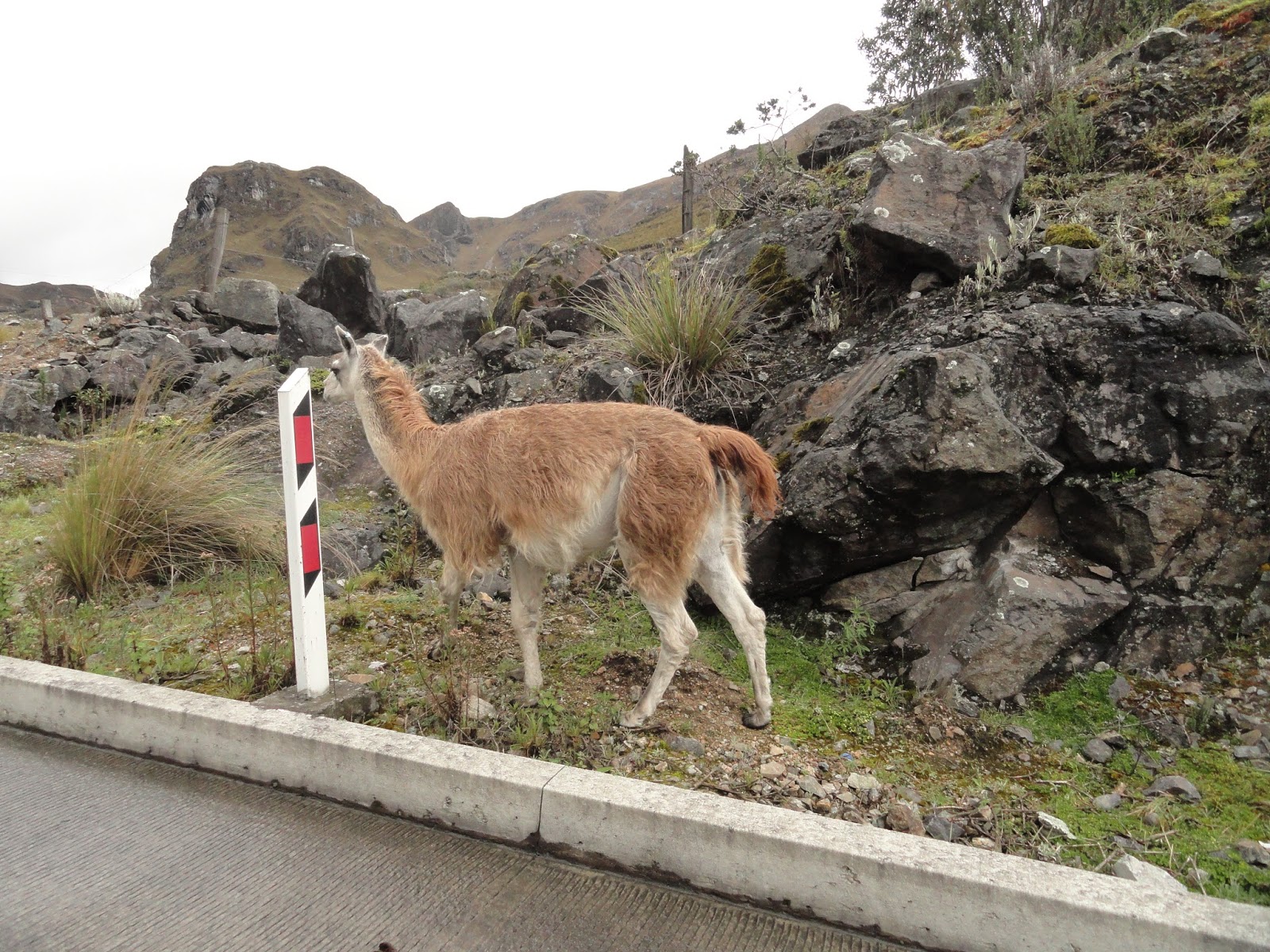
Roadside company!

Dos Chorreras Lodge


Until next time...hasta luego, 

Connie & Mark 


Monday, March 7, 2016

Getting Your Stuff to Ecuador


Coming out next month is the book, Chicken Soup for the Soul: The Joy of Less. In it is my story "Fire Drills" about how we whittled  down thirty-five years of marriage into six suitcases. It wasn't easy and it wasn't fun. In fact, I'd rather forget about that part of the journey because it also coincided with selling our house, marrying our younger son, and doing "fire drills."

To be honest, going through photo albums was the most difficult part because I was a Creative Memories person and I recorded every moment of our boys' lives. I'm not going to share the entire story as the book comes out on April 19th , but I will say that getting rid of our stuff gave us a new lease on life and I wouldn't do it any differently.  


We've made many trips back to the States to visit family, but I've resisted the urge of going down to the basement of our younger son's home and flipping through the photo albums because I know I'll be tempted to put a few in my suitcase.

Getting your stuff to Ecuador is different for everyone. We know folks who have come with a whole container of stuff and then end up selling everything once they get here because they've decided to update their apartment with a new look. Some bring a pallet with treasured possessions that they're not able to part with quite yet. Others make several trips to Ecuador through the years and each time drop off suitcases with friends until they're ready to make the big move for good. And then there's us and many others who come with suitcases in varying numbers. 

Here's an excerpt out of the book Living and Retiring in Cuenca: 101 Questions Answered (Second Edition) about suitcases and the friends/neighbors way to go: 

     *Suitcases. This is when you swing in the direction of selling, storing, and giving away everything and arrive with your “four” suitcases (depending on the airline). We flew American Airlines, and we were allowed four suitcases, not weighing more than 50 pounds, and two carry-ons. If you fly business or first class, you will receive a larger luggage allowance. However, depending on the time of year you fly, there may be restrictions on how many carry-ons you can bring on the plane. Personally, I go on the lighter side with carry-ons in case of a full flight, as those may be relegated to the cargo hold.

     If you go over the weight limit on your checked luggage, the airline will assess an additional fee. This varies by carrier. To avoid these fees, we used every usable space. You can’t believe how much stuff you can fit into a size 11 shoe (my husband’s size). Some couples even practice packing and repacking.


     *Friends and neighbors. This option is becoming more and more popular. If you’re planning a visit to Cuenca before your actual move, consider dropping off a suitcase (or two) with friends to keep for you until your return. Some folks use their frequent flyer miles and invite family and friends down. In exchange, these visitors bring some of their hosts’ belongings in a spare suitcase. There is no tax or duty on luggage, so it’s probably the cheapest way to get things to Cuenca. 

On a personal note, we did the container thing when we moved to Italy and vowed never to do that again because if you ever decide to return to the States you have to ship the container back. Not that it's stopped anyone because we know a lot of expats who ship a container down to Ecuador and ship it back when they leave. We had already been through that whole ordeal and decided not to repeat history.

In the end, it's a personal decision; there is no right or wrong way of getting rid of your stuff or "bringing it with you." Whatever you decide, it will always make a good story!

Until next time, 


Connie and Mark


Sunday, February 28, 2016

Best Time to Book Tickets to Ecuador

Question: What is the best time to book tickets to Ecuador? 

Answer: According to recent studies, the best time to book a flight is 50 to 100 days before your scheduled flight. The best day to purchase tickets is on a Tuesday at 3:00 p.m. EST. If you can book your flight on a Tuesday or Wednesday, returning the following Tuesday or Wednesday, you also can save some money. If you use all three methods, you can save hundreds of dollars.
     
There are some exceptions, but flying Tuesday to Tuesday or Wednesday to Wednesday are the best days of the week for a good deal on airfare. If you have less time, Thursday to Sunday will also get you good rates.
     
Keep your dates flexible when booking; most airlines let you see the cheapest days of the week on a calendar grid. You can also get emails alerts notifying you when the rates go down; many times you’ll notice the dates fluctuating within a month. The websites www.bestfares.com and www.airfarewatchdog.com are two that will alert you to changes in fare prices.

If you want to compare rates of different airlines or want to travel to your destination all in one day, check out www.skyscanner.net. It searches hundreds of sites in seconds and also gives you a calendar grid where you can check out the cheapest fares for each day of the month.
     
If you don’t book your flight on your first visit to a website, be sure to clear your “cookies” from your computer or use another computer when you return to the site to book your flight. Believe it or not, it makes a difference, as these travel websites use tracking software and record your searches. The best rates usually appear on your first search and go up with each subsequent visit. For more tips on saving money on flights, check out the tips on FareCompare. 

We have a special preference for Avianca Airlines and normally our round trip tickets are $500 per person from Guayaquil to New York. They have excellent staff, comfortable leather seats, wonderful food and beverage service, and warming towels -- even in economy. It's the little things that keep us coming back.

TAME, the national airline of Ecuador, has flights from Guayaquil to New York (non-stop), but they are more expensive and have limited dates. 


We usually book with CheapTickets or CheapOAir, but this coming August we booked with Avianca through Vayama. They were offering the cheapest rates at the time, so we'll let you know if there are any glitches.

Feel free to comment on any ways you have used to save on airfare to and from Ecuador.

Until next time...hasta luego!  


Connie & Mark


Wednesday, December 9, 2015

Why Cuenca?

Tres Cupolas

Every week, I'll post a question from the second edition of the book 101 Questions Answered. After five years of living here, some of the questions are vastly different and others are amazingly the same, like Question #1.

Question #1: Why retire in Cuenca and not one of the other top retirement destinations in the world?

Answer:  Cuenca was not really our top retirement destination; Italy was our first choice. But on $1,317 a month with my husband’s pension from UPS, we knew that our quality of life wouldn’t be that great. We had lived in Italy for six years in the 1980s. It was expensive back then, and the health care system wasn’t anything to write home about.
     When we looked at other countries in the running, like Panama, Mexico, Malaysia, Costa Rica, Spain, Malta, Colombia, Portugal, Thailand, and Uruguay, we realized they were too far, too hot, too cold, or too expensive. Cuenca kept rising to the top and still remains in first place.
     The things that drew us to Cuenca are the same things that keep us here:

     *Cost of living. Although items have gone up in price over the past five years, you can still find a $1.50 almuerzo (but $2.50 is about average). The things that will cause you to go bankrupt in the States aren’t even a possibility here, namely health care. Utilities are ridiculously low—almost a joke—and there’s no need for heating or air conditioning. Public transportation is great (a 25-cent bus ride or a $2.00 taxi fare will get you where you need to go). Fruits and vegetables are inexpensive. All this allows us to live comfortably without the fear of a medical crisis using up the rest of our hard-earned savings.


     *Spring-like temperatures. As mentioned, Cuenca enjoys a mild climate—there’s no need for air conditioning, and heating costs are minimal. The only place I know in the U.S. that has pleasant temperatures all year long is San Luis Obispo, California (hovering around 68˚F to 70˚F). Cuenca enjoys what is called a subtropical highlands climate, which basically means that lush green tropical plants flourish without the heat and humidity of the coast. Because of Cuenca’s altitude—8,300 feet—and its proximity to the Pacific Ocean and the Amazon, with the equator in the middle, the climate remains relatively temperate with highs in the 70s and lows in the 50s. Yes, we have rain and hail sometimes, but no snow or ice, and no oppressive heat or humidity.

Parque Calderon where Humming Birds are Everywhere

     We have two “seasons”: dry (June through December) and rainy (January through May). Our coldest month is August, and our warmest months are November, December, and January. My least favorite month is April, which is called aguas mil (a thousand waters), when we average 4.29 inches of rain during the month. If you’re looking for tropical and hot, Cuenca will disappoint you!

     *Affordable health care. This has been the greatest part of living in Cuenca. As a cancer survivor, I’ve experienced how devastating a medical crisis can be and how it can wipe out your savings. We pay $145 per month for IESS, Ecuador’s medical Social Security system, which covers everything (no co-pays). We also have our private doctors—out of the system—with visits ranging from $25 to $40 and follow-up visits are free.
Laboratory Clinic

     Dental care is highly affordable as well. A dental cleaning and x-rays are $45, and fillings run about $35. My husband has had four root canals with implants and crowns, and they’ve never cost more than $500. Cosmetic surgery is also affordable. I can’t comment on the price tag as I haven’t gone under the knife, but many of the doctors who practice here have received their training in the States. Medical care is highly personal in Cuenca; you’re not just a number. It’s normal for physicians to spend forty-five minutes to an hour with you.

     *Even more reasons. Another thing that keeps us here is Cuenca’s colonial charm. El Centro (the historic center) occupies approximately 12 blocks by 20 blocks and contains a variety of restaurants, Spanish colonial buildings, and adobe houses alongside elegant hotels, cafes, and bakeries. I still marvel at the cobblestone streets, terracotta rooftops, and colonial period architecture, including the churches and cathedrals. From our condo, we enjoy a view of the Cuenca skyline with the blue domes of the Cathedral of the Immaculate Conception (New Cathedral)—absolutely breathtaking at sunrise or sunset. I never tire of our city view and the Andes Mountains.
     Cuenca is the cultural capital of Ecuador, so tourists from around the world descend upon Cuenca every year. In addition, because of the many Spanish-language schools, there are people who come just to study the language—usually you’ll see them wearing flip-flops and shorts and carrying backpacks. Many events like concerts and symphonies are free. And the restaurants continue to grow in size and diversity. Outdoor cafes are also becoming more popular and you can find them throughout the city. My favorite place is still Parque Calderon—the center of the city—with the Nueva Catedral (New Cathedral) on one side with its pink
marble columns and the Catedral Vieja-Iglesia del Sagrario (Old Cathedral) on the other side (where the tour buses line up).
    As a UNESCO World Heritage Site, there’s always something going on and buildings being preserved and transformed. But the diversity of the culture is what makes living in Cuenca so interesting. Alongside the indigenous women with their colorful velvet skirts, you’ll see conservatively dressed Cuencanos wearing European-styled suits. The contrast is fascinating. The Spaniards ruled Cuenca for 500 years, and we can thank them for the colonial period architecture, which is so prevalent in the city.
Santo Domingo Iglesia


Cuenca Symphony

     Lastly, the expat community is one of the largest and most well established anywhere in the world. When we first arrived, there were only a handful of expats. Today, we can’t walk around the block without seeing a Norte Americano. When we moved into our condo building, we were the only Americans. Now, we’re one of three in our building. With the expat population booming, there are a variety of volunteer opportunities, support groups, art and language groups, and two English-language magazines for expats.
     Personally, we love the diversity—not only culturally—but in the land with the Galapagos, the coastal regions, and the Amazon. We find our way to the coast (four hours away) by bus at least three times a year, and the Galapagos is only one and a half hours from Guayaquil by plane. We have yet to get to the Amazon, but it’s on our bucket list. In five years, we’ve grown to love this unique city and its people. And we have just as many Ecuadorian friends as we do American, which we count as one of our greatest blessings. This means we have finally integrated and have been accepted. We also volunteer and give back as much as we can.

     We live comfortably on $1,317 a month because we own our condo, so rent is not a consideration. One of our greatest luxuries is not having a car; we use public transportation, walk, or take a taxi. We also wanted to live somewhere where plane tickets to fly back to the States weren’t outrageously expensive. We fly to JFK on Avianca Airlines from Guayaquil (round trip) for $500 per person, which is less expensive than flying East Coast to West Coast in the States. 


Independence  Day Celebrations Nov. 3-5, 2015

Until next time...hasta luego, 

Connie & Mark 


Monday, November 30, 2015

101 Questions Answered -- Second Edition is Available!

Finally, it's finished! After many delays and setbacks, Living and Retiring in Cuenca Second Edition is available on Amazon.com.

When I wrote the first edition in 2011, it was the first English book on Cuenca with the nitty-gritty nuts and bolts on just about everything you would need to know to get your life started in this lovely city. Since that time, many more have jumped on the bandwagon and wrote their own version, either on Cuenca or Ecuador. So do we really need another book on Cuenca? Probably not. But I was committed to updating and revising the first book and it was helpful for to me to see exactly what's changed and what's stayed the same. The infrastructure, of course, has changed considerably, but the people and culture are the same and that's what drew us here. 

In the five years that we've been here, we've seen friends come and go (usually back to the States after the grandchildren were born). It seems that the happiest couples in Cuenca are the ones with no kids or grandkids. Or maybe that's because they don't know what they're missing! In five years, we've married both our sons and recently became grandparents to Clara Joy in August. I spent a month with her in Pennsylvania and I wouldn't have traded it for anything (720 hours of pure joy). It's certainly something I couldn't have done if I was working a full-time job until I was 72 years of age, while living in the States. We plan to go back for her first birthday and in the meantime, we keep in touch with FaceTime and every Monday I send a video of me reading to her.

Yes, we plan to stay in Cuenca and in 1-1/2 years we'll receive our Social Security (if there's anything left), and we'll be able to travel more.

Prices have definitely gone up in Cuenca and my friend who lives in Mexico recently brought that to my attention. Food, clothing and electronics have increased (definitely), but the tariffs that were imposed a year ago seem to be lifting because I've been seeing more imports in the grocery stores, like: Campbell Soup, Mint Milano Cookies and Pam Cooking Spray (all for a price, of course). 

The cost of paradise: Nature Valley Almond Milk ($5.35). Last month it was $3.25. Some things go up and down monthly. If you see something you like, buy it because it may not be there tomorrow or it just may cost you more!

Cost of Paradise: $5.35

Oh, there's a retraction in the book "no visitors" yet! I stand corrected because my sister and her husband are coming for a visit in March for two weeks. They're still working on their passports, so I won't hold my breath, but that's HUGE! 

Hope your Thanksgiving was a blessed one and I hope your Cyber Monday is full of great deals!

Until next time...hasta luego!


Connie and Mark


Wednesday, September 23, 2015

What's New?

We have some great news!

On August 17, 2015, we became grandparents for the first time. What a game changer it's been. Our hearts are bursting with joy--the first girl in our family in a very long line of boys. We're thrilled. It also marks a transition in our expat life as we know grandchildren are one of the reasons why expats return to the States for good.

We definitely plan on staying in Cuenca and making more frequent trips back to the States. I look at it this way. If I lived in the States, I would be working full-time until I was 72 and what job would allow me to spend an entire month with my granddaughter? So I feel fortunate that we have this lifestyle and the ability to come and go as we please. Well, at least I do anyway. I have the portable income as a writer, so my job goes where I go. Mark is not that fortunate in that he works at an international school and is lead teacher.

On October 3rd, our older son will be getting married in St. Michael's, Maryland and we get to enjoy quality time at the destination wedding with family and friends. We're so much looking forward to it. A new baby in the family, a new daughter-in-law, and I just turned 60! When we arrived in Cuenca, five years ago, I thought folks in their 60's were old. Well, it seems that I've joined the "old" folks club and I couldn't be happier. Two more years and we receive our Social Security and we can stop working and do more traveling.We're thankful that we were able to retire at 55, but it's been semi-retirement with my writing and Mark's teaching. I think at 62, we'll be ready to hang it all up!

More good news: I finished the second edition of Living and Retiring in Ecuador: 101 Questions Answered and it will be available on Amazon in November. It's with the editor right now and should be back to me for my final thoughts this week. When I wrote the first edition in 2011, it was the only English resource on Cuenca and now it seems like just about everyone has a book on Cuenca or Ecuador. But I think it's good thing that there's so much information as it's important to get as many perspectives as possible. I plan on keeping the second edition updated once a month because I certainly don't want to do that much work ever again! The rose-colored glasses came off and I think it's a much better portrayal of our life in Cuenca (five years later).


I also wrote an e-book on Secrets to Writing a Winning Chicken Soup Story as I've had quite a bit of success writing for them, so I thought it was time to help others get published. There's a formula and I share my "souper" secrets in the book. If you've ever wanted to write a story for the world's largest compilation series, now is your opportunity to do it. My newest story is in Chicken Soup for the Soul: Volunteering and Giving Back titled "Making a Difference" that came out on August 18, 2015. Unfortunately, I won't be doing any book signings while in the States this time because I'm in Mimi mode!

Visitors from the States: We've also had some company visiting us and more to come; it's only taken five years! Good friends from our hometown in Pennsylvania stayed for a week, a good friend in Pennsylvania who now lives in Quito came for a day, and my sister will be paying us a visit in March 2016. It's been so much fun playing tourist in Cuenca!

Cuenca is not the same city we came to five years ago--a lot has changed. The tranvia will be ready in 2016; we have a new Four Points Sheraton being built around the corner from us near Mall Del Rio, a new wing opened up in the mall with more shops, and we have a brand new Supermaxi grocery store right down the street from us, which is a blend of Safeway meets Whole Foods. It's supposed to be the biggest and the best Supermaxi in Ecuador.

Jardin del Valle
Last week, we had a mini vacay before our trip to the States and stayed at Jardin del Valle in the Yunguilla Valley. We've been going there for years, but hadn't stayed there after their big expansion. It's only about an hour from Cuenca or two hours by bus and it's so peaceful and relaxing. Alfredo and his wife, Sonya, are the consummate hosts. We only stayed three days and two nights, but our body felt like we had a two-week vacation. I highly recommend this "new" place!

View from Our Balcony
One of Three Heated Pools  
Butterfly Shrimp
Gorgeous Views from Every Angle
Family Pool 

Until next time...hasta luego!


Connie & Mark


Related Posts Plugin for WordPress, Blogger...